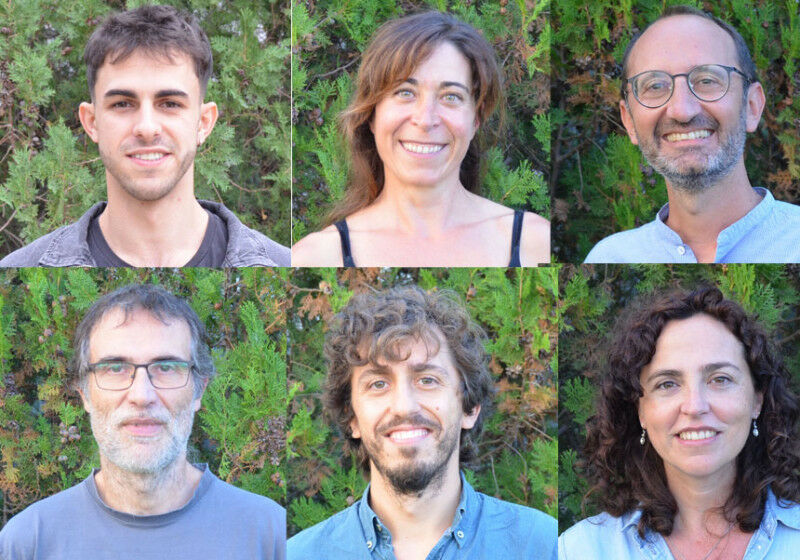
(From left to right). Top: José María Tárraga, Eva Sevillano and Gustau Camps-Valls. Bottom: Jordi Muñoz, Michele Ronco and Maria Piles.
( From left to right ). Top: José María Tárraga, Eva Sevillano and Gustau Camps-Valls. Bottom: Jordi Muñoz, Michele Ronco and Maria Piles. An article from the Image and Signal Processing (ISP) research group of the University of Valencia (UV), led by Gustau Camps-Valls and which has used Artificial Intelligence (AI) as a tool, concludes that the socioeconomic level explains the population movements that occur after catastrophes generated by extreme natural phenomena such as floods, windstorms and landslides. The work has been published in the journal Nature Communications and for it a global database was created with floods, windstorms or landslides during the period 2016-2021. Researchers used explainable machine learning techniques to model and understand population internal displacement flows and patterns on a global scale based solely on observational data provided by collaborators at the Internal Displacement Monitoring Center (IDMC) in Geneva, the centre of international reference in monitoring the internal displacement of populations in each country. The work demonstrates that population movements can be mainly attributed to the combination of poor domestic conditions and heavy rainfall.