


news 2026
« BACK
 Global greening: The Earth’s green wave is shifting
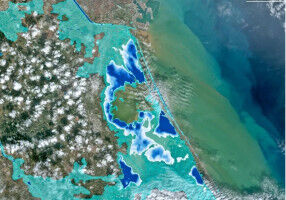 Climate change increased by 55 % the extension of the area affected by the Valencia dana
 A study analyses the policies of 40 countries to combat climate change and identifies the most effective ones
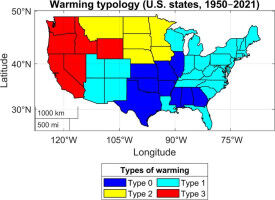 41 US states are warming, though each in a different way, according to a UC3M and UNIZAR study
 Climate change advances the start of the reproductive cycle of the Mediterranean gorgonian
 Social networks spanning thousands of square kilometres during the Upper Palaeolithic period
Environment
Results 1 - 8 of 8.
Environment - 24.02.2026
A team of scientists led by Leipzig University and the German Centre for Integrative Biodiversity Research (iDiv) in collaboration with the University of Valencia and others have developed a new method to track the Earth's greenness - a key indicator of vegetation health and activity - by calculating its centre of mass.
Earth Sciences - Environment - 19.02.2026
Unprecedented increase in ice melt in Greenland due to climate change
A study published in Nature Communications shows that water resulting from ice melting has increased six-fold in recent decades. A study led by the University of Barcelona and published in the journal Nature Communications shows that climate change has profoundly altered extreme episodes of melting of the Greenland ice sheet: it has made them more frequent, more extensive and more intense.
Environment - Earth Sciences - 17.02.2026
A study led by the University of Valladolid (Uva) and the State Meteorological Agency (AEMET), with the participation of the Desertification Research Center (CIDE), a joint center of the University o
Environment - 11.02.2026
The most effective climate policy is a combination of various measures, ranging from taxing carbon emissions above a certain threshold to the establishment of fiscal measures on fossil fuels, research and investment in renewable energies. This is the conclusion of an international study that compared the climate policies of 40 countries over more than 30 years and was published in the journal Climate Policy .
Environment - Politics - 06.02.2026
According to a study by UC3M and UNIZAR. A study by UC3M and UNIZAR published in PLOS Climate uncovers hidden patterns of climate change by analyzing the entire temperature distribution rather than just the mean, as is common in most analyses. The research reveals that the West Coast states are experiencing increases in their highest annual temperatures, whereas many northern states show warming in the lower temperature range.
Environment - Life Sciences - 05.02.2026
Warm spring temperatures are arriving earlier and earlier due to climate change, bringing forward the breeding season of a marine species that is crucial to the structure and biodiversity of coral reefs. Climate change is accelerating the arrival of warmer spring temperatures, and this phenomenon is affecting the conservation of many species.
History & Archeology - Environment - 22.01.2026
Study reveals social networks spanning thousands of square kilometres during the Upper Palaeolithic period The study, based on the geochemical analysis of knapped stone tools, shows that hunter-gatherers in the center of the Iberian Peninsula maintained long-distance contacts, covering large areas of Western Europe.
Environment - Life Sciences - 09.01.2026
Tomato genes communicate to resist drought and improve fruit quality
Researchers describe how tomato genes communicate to resist drought and improve fruit quality A study by the Institute of Integrative Systems Biology (I2SysBio), a joint centre of the University of Valencia and the Spanish National Research Council (CSIC), together with the Millennium Nucleus Phytolearning (Chile), has deciphered how tomato ( Solanum lycopersicum ) genes communicate with one another to coordinate essential processes such as fruit ripening and drought response.


Advert