


news 2025
« BACK
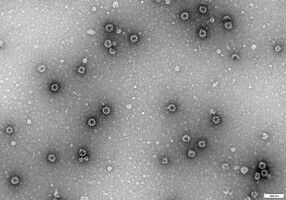 Role of a key enzyme in rotavirus and norovirus infection, the leading causes of acute gastroenteritis
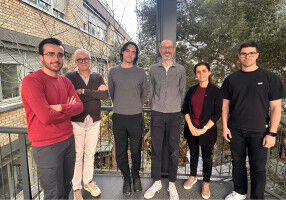 Role of the coronavirus ’anchor’: the least-known part of the Spike protein is key to infection
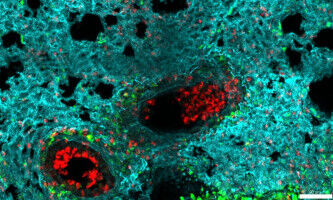 NeuMap: a pioneering map of neutrophils that redefines their role in health, infection, and inflammation
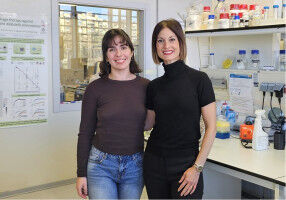 Mechanisms of phage adaptation to eradicate clinically relevant bacteria
 Researchers identify key molecular mechanism in cell communication
 A porcine coronavirus uses an unexpected route to enter cells
 How did animal life transition from aquatic to terrestrial environments?
 Having pets in early childhood may influence children’s emotional development
 Researchers decipher mechanism that prevents the loss of brown adipose tissue activity during ageing
 Researchers identify genetic mechanisms involved in a disorder that affects balance cells in the ear
 Researchers decipher a mechanism that determines the complexity of the glucocorticoid receptor
 New coronaviruses discovered in bats in Spain, some similar to SARS-CoV-2
 New advances to boost regeneration and plasticity of brain neurons
 Study identifies the best breeding strategy for more productive wheat varieties
 AI tool to read the ’code’ of bacterial viruses and design personalised phage treatments
 First description of colour changes in the wall lizard during growth, invisible to the human eye and with a possible communicative function
 A diet rich in vegetable protein and fibre helps maternal and infant health during pregnancy and breastfeeding
Life Sciences
Results 1 - 20 of 41.
Life Sciences - Health - 19.12.2025
Researchers identify the role of a key enzyme in rotavirus and norovirus infection, the leading causes of acute gastroenteritis A research team led by professor Jesús Rodríguez from the University of Valencia (Department of Microbiology) has identified the decisive role of fucosidases - enzymes present both in the human intestine and in the gut microbiota - in infection by rotavirus and norovirus.
Life Sciences - Health - 17.12.2025
New methodology to decipher how human ancestors moved
When studying how fossil hominids moved, researchers usually analyse the morphology of bones - which is crucial for understanding the evolution of bipedalism - focusing mainly on muscle insertion sites. However, the potential information of studying other types of soft tissue, such as joint ligaments, is often overlooked.
Life Sciences - Health - 09.12.2025
Researchers uncover the role of the coronavirus "anchor": the least-known part of the Spike protein is key to infection A study by the University of Valencia (UV) and the Spanish National Research Council (CSIC) has revealed that a previously little-studied region of the SARS-CoV-2 coronavirus Spike protein is essential for the virus to enter human cells.
Life Sciences - 03.12.2025
Published in Nature, the atlas will be freely available to researchers around the world. An international team has published NeuMap, the first atlas to reveal the global architecture of neutrophils, showing how this "first line of defense" reorganizes to protect, remember, and heal. The study-led by scientists at the CNIC, Universidad Carlos III de Madrid, Yale University, and Westlake University-redefines our understanding of immunity.
Health - Life Sciences - 02.12.2025
Researchers uncover the mechanisms of phage adaptation to eradicate clinically relevant bacteria A study led by Celia Ferriol-González and Pilar Domingo-Calap, researchers at the Institute for Integrative Systems Biology (a joint centre of the University of Valencia, UV, and the Spanish National Research Council, CSIC), reveals the evolutionary mechanism used by phages - viruses of therapeutic interest - to infect multidrug-resistant bacteria.
Life Sciences - Health - 28.11.2025
A new study describes a key molecular mechanism that explains how cells exchange information through extracellular vesicles (EVs), small particles with great therapeutic potential. The results, published in the Journal of Extracellular Vesicles , reveal that the Commander protein complex, previously known for its role in membrane recycling, also coordinates the entry and internal destination of vesicles within the cell.
Health - Life Sciences - 20.11.2025
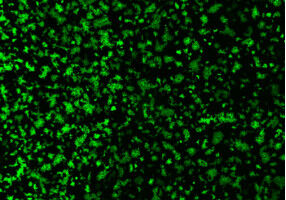
Researchers discover that a porcine coronavirus uses an unexpected route to enter cells An international team led by the Institute for Integrative Systems Biology (I²SysBio) - a joint centre of the University of Valencia (UV) and the Spanish National Research Council (CSIC) - together with the Institut Pasteur in Paris, has identified, for the first time, a functional receptor for the porcine haemagglutinating encephalomyelitis virus, also known as porcine coronavirus PHEV.
Environment - Life Sciences - 13.11.2025
The transition from aquatic to terrestrial life has been one of the most significant evolutionary challenges. This decisive process in the evolution of life on Earth required a profound renewal of the genome. But what changes did genomes undergo to facilitate the transition to the terrestrial environment? Now, a study published in the journal Nature reconstructs the key genomic adaptations at different stages of the evolutionary transition to terrestrial ecosystems.
Psychology - Life Sciences - 12.11.2025
A research team from the INMA Project on childhood and environment - which includes the University of Valencia and the Fisabio Foundation of the Generalitat Valenciana among others - has analysed how pet ownership during the first years of life may be related to aspects of children's emotional and behavioural well-being.
Environment - Life Sciences - 07.11.2025
The presence of reeds on riverbanks could be beneficial for fish
The presence of reeds, an exotic and invasive plant capable of altering the ecological balance in the natural environment, could have positive effects on fish populations in rivers. This is according to a study published in the journal Science of The Total Environment and led by Professor Alberto Maceda, member of the Research Group FORESTREAM from the Faculty of Biology and the Biodiversity Research Institute (IRBio) at the University of Barcelona.
Health - Life Sciences - 05.11.2025
As the body ages, brown adipose tissue activity decreases, fewer calories are burned, and this can contribute to obesity and certain chronic cardiovascular diseases that worsen with age. A study led by the University of Barcelona has identified a key molecular mechanism in the loss of brown fat activity during ageing.
Life Sciences - Pharmacology - 30.10.2025
A study by the UB and IDIBELL shows how the continued use of some antibiotics and drugs damages the cells of the vestibular system of the ear The vestibular system is responsible for the sense of balance in the inner ear. Prolonged use of toxic substances, such as certain antibiotics or anticancer drugs, can damage the hair cells that form part of this system, leading to alterations in balance and other motor skills.
Life Sciences - Health - 27.10.2025
Drugs to treat inflammatory and autoimmune diseases - such as asthma, psoriasis, rheumatoid arthritis or Chrousos syndrome - act mainly through the glucocorticoid receptor (GR). This essential protein regulates vital processes in various tissues, so understanding its structure and function at the molecular level is essential for designing more effective and safer drugs.
Health - Life Sciences - 16.10.2025
A multidisciplinary research team involving the University of Valencia has identified eight coronavirus genomes in bats from different regions of Spain, three of which could represent new viral species. The findings have been published in the journal PLoS Pathogens .
Life Sciences - Health - 14.10.2025
The brain's mechanisms for repairing injuries caused by trauma or degenerative diseases are not yet known in detail. Now, a study by the University of Barcelona describes a new strategy based on stem cell therapy that could enhance neuronal regeneration and neuroplasticity when this vital organ is damaged.
Life Sciences - Environment - 13.10.2025
Deciphering the mechanisms of genome size evolution
The sequencing of the genomes of a spider from the mainland ( Dysdera catalonica , left) and one from the Canary Islands ( Dysdera tilosensis , left) opens a new perspective for understanding how genome size evolves in similar species, an enigma that has baffled the scientific community for years. In a few million years, the spider Dysdera tilosensis - a species endemic to the Canary Islands - has reduced the size of its genome by half during the process of colonization and adaptation to its natural habitat.
Environment - Life Sciences - 08.10.2025
José Luis Araus, professor at the University of Barcelona's Faculty of Biology and member of Agrotecnio - CERCA centre in agrotechnology - participated in a study showing that wheat varieties perform best under ideal conditions (water, nutrients, temperature) also yield more in challenging environmental and agronomic situations, such as excessive heat or drought.
Life Sciences - Health - 06.10.2025
Scientists develop AI tool to read the "code" of bacterial viruses and design personalised phage treatments A research team from the Institute for Integrative Systems Biology (I²SysBio), a joint centre of the University of Valencia (UV) and the Spanish National Research Council (CSIC), has developed an innovative artificial intelligence system to predict which bacteria can be targeted by bacteriophages (phages) based on the sequence of a key enzyme: depolymerase.
Life Sciences - 30.09.2025
A study by the Cavanilles Institute of Biodiversity and Evolutionary Biology at the University of Valencia (UV) has described changes in the ventral and lateral colouration of a species of lizard typical of the northern Iberian peninsula, Podarcis muralis (or wall lizard).
Life Sciences - Health - 09.09.2025
A Mediterranean-style diet, rich in fibre, vegetable proteins and healthy fats, benefits maternal health during pregnancy and breastfeeding.


Advert